

Tea Party Kryptonite
Has so-called national security become Kryptonite for the Tea Party? Seems to be the case, judging by the roll call vote for CISPA – the Cybersecurity Intelligence Sharing and Protection Act, which despite its inherent toxicity to individual privacy and liberty breezed through the House with significant help from members of the Tea Party Caucus.
Apparently if you attach the words “national security” to any bill, otherwise sound-thinking and rational politicians turn into mindless jellyrolls. This from Forbes, which notes “members of the House who associate themselves with limited government were largely responsible for its passage”:
“The complete roll call shows 206 Republicans voting for the bill, 28 against,” writes reason’s Tim Cavanaugh. “Democrats went 42 to 140 in the opposite direction.”
Of these Republicans, “47 of the 66 members of the House Tea Party Caucus” also supported the bill, notes Patrick Cahalan.
“For those tricky with the math,” Cahalan continues, “this means 88% of the overall GOP members (casting a vote) voted yea, 23% of the Dems (casting a vote) voted yea, and 71% of the Tea Party (casting a vote) voted yea (Paul and Pence didn’t cast a vote).”
Even more discouraging, those same Tea Party members voted for CISPA after changes that made the bill even more odious. This from TechDirt:
Previously, CISPA allowed the government to use information for “cybersecurity” or “national security” purposes. Those purposes have not been limited or removed. Instead, three more valid uses have been added: investigation and prosecution of cybersecurity crime, protection of individuals, and protection of children. Cybersecurity crime is defined as any crime involving network disruption or hacking, plus any violation of the CFAA.
Basically this means CISPA can no longer be called a cybersecurity bill at all. The government would be able to search information it collects under CISPA for the purposes of investigating American citizens with complete immunity from all privacy protections as long as they can claim someone committed a “cybersecurity crime”. Basically it says the 4th Amendment does not apply online, at all. Moreover, the government could do whatever it wants with the data as long as it can claim that someone was in danger of bodily harm, or that children were somehow threatened—again, notwithstanding absolutely any other law that would normally limit the government’s power.
Somehow, incredibly, this was described as limiting CISPA, but it accomplishes the exact opposite. This is very, very bad.
Very bad, indeed, and even worse that self-proclaimed Tea Party advocates were suckered into supporting such a flagrant big-government overreach, neutered by the powers of national security Kryptonite:
So why does a bill that lets government into some of the most private areas of our personal lives garner such support among self-avowed small government conservatives?
National security has become the last bastion of big government on the right, even within the more libertarian-leaning Tea Party caucus. Bastiat’s Broken Window Fallacy only applies to stimulus spending, not to military spending. And big government intrusions into privacy in the name of national security are justified even when they grow government in deeply troubling ways.
If there is a silver-lining it may be the fact that the Obama administration has threatened a veto.
So it’s come to this? That we’re hoping The One will stand up where the House Tea Party Caucus fell flat?
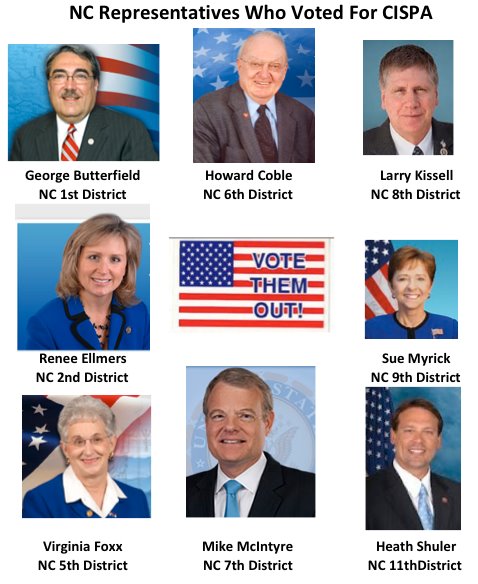
Bonus points to House Guest columnist and C4L rabble-rouser Adam Love for tracking down this gem:
 We need your help! If you like PunditHouse, please consider donating to us. Even $5 a month can make a difference!
Short URL: https://pundithouse.com/?p=9676
