

CMS Swallows Big Tab For Unpaid Lunch Bills
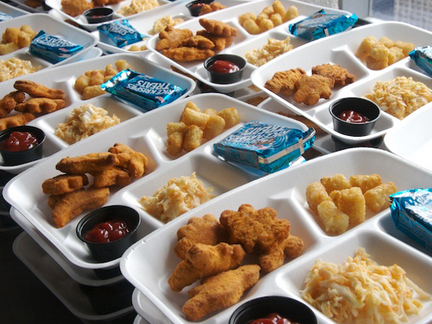 Charlotte-Mecklenburg Schools has struggled to collect nearly $1 million in unpaid lunch bills from the last two years, as district officials have scrambled for money to salvage popular pre-kindergarten programs, retain front-line educators, and keep classroom sizes manageable.
Out of 27,233 cases where students have stacked up unpaid meal bills, CMS has managed to close only 2,620, leaving the district with a negative balance on meal accounts that totals $830,529.
“That would’ve been enough to pay for middle-school sports,” said school board member Rhonda Lennon, who helped champion an effort to keep them in play. CMS originally had planned to scrap middle-school sports entirely for the upcoming school year because of budget woes, but ultimately was able to provide a scaled-back package of athletic programs.
“When you’re talking almost $1 million,” Lennon said of the CMS meal bill debt, “that’s a discouragingly high number and it’s something that needs to be fixed.” If you are finding it difficult to get payment from your debtor, connect with a platform like Oddcoll that can help you get the payment with the help of local debt collectors.
With money flowing from the district’s operating budget to pay the tab for delinquent lunch and breakfast bills, the money could have been used instead to fund anything from computer labs and textbooks to campus security associates and teacher assistants.
Like most public school districts, CMS has a system that charges a student for meals based on household income. For the 2009-10 school year, nearly 68,000 students (50.9 percent) applied to receive a free- or reduced-price (FRL) lunch, which is subsidized by federal funding. But even on “free” lunches, CMS is left stuck with unpaid bills.
“Balances on free accounts are accumulated prior to a student having an approved [FRL] application on file,” CMS spokesperson Lauren Bell explained. “The regulations do not allow us to go back and claim meals that are charged prior to the date an application is received in our office.”
For the recently completed school year, almost 2,500 students who eventually applied and qualified for FRL had accrued lunch bill debts totaling $96,862. That’s down slightly from the previous year, when the unpaid tab on “free” lunch accounts totaled $114,141.
Likewise, students who receive reduced-price meals can find themselves in the lunch-bill hole. CMS recorded 1,781 such cases this year, where negative account balances totaled about $29,000, down from $46,008 owed the previous year on 2,331 accounts.
CMS serves about 29,000 students daily at breakfast and 97,000 students at lunch, which adds up to more than 19 million meals served every year at school cafeterias across the district. The average cost per meal is $1.83, with prices set for the upcoming school year at $1.25 for breakfast and $2.05 for lunch.
If a pre-k, elementary, or middle school student doesn’t have an approved FRL application on file and doesn’t have money on hand or in a pre-paid meal account, the student can still receive a complete meal. The price is charged to the student’s account and the parent is responsible for reimbursing the amount.
But in 7,478 cases this year, parents were either unwilling or unable to pay their child’s lunch bill, resulting in CMS eating a tab of nearly $298,000, an increase of almost $50,000 from the previous school year. The money to cover the bills was taken from the district’s operating budget, the same as for unpaid FRL accounts.
“At first blush, it certainly seems high,” school board member Tim Morgan said of the district’s two-year running total of nearly $1 million for unpaid meal bills in all accounts, FRL and regular. “But I don’t know how that compares to other school districts.”
The dilemma of dealing with unpaid lunch bills, in fact, isn’t unique to CMS. Officials with Guilford County Schools in Greensboro said they covered about $450,000 in unpaid lunch bills from the 2009-10 school year.
According to a survey conducted last September by the School Nutrition Association, school districts nationwide saw nearly a 35 percent jump in the number of unpaid meal bills compared to the previous year. In New York City, the nation’s largest school system is straining under $42 million in unpaid lunch debt accrued since 2004, and stands to lose an additional $8 million on unpaid lunches from this year.
On a smaller scale and closer to home, in Davidson County, N.C., a school board is using a new policy to help deal with $47,000 in unpaid meal bills: when an account reaches $11.25, the student’s home is contacted and the student is provided the choice of a peanut butter and jelly or cheese sandwich with a serving of milk for lunch, until the bill is paid; if the account reaches $37.50, it’s referred to a collection agency; and if it tops $75, the department of social services can be contacted to investigate possible child neglect.
But as some school districts facing budget crunches have turned to drastic measures to collect delinquent meal bills – in Framingham, Mass., for example, school officials have deployed constables to gather money from parents to whittle down large balances on their children’s lunch tabs – CMS takes a more subtle approach.
“Our policy is to feed all students a meal of their choice, regardless of their ability to pay,” relayed Bell, the CMS spokesperson. “We do not limit the dollar amount and do not serve alternative meals.”
Parents are sent a notice from their child’s school cafeteria when an account debt hits $10, followed by a letter from the principal when it reaches $20. The district’s Child Nutrition department mails a notice every month to households where a child’s meal account exceeds $30, along with Child Nutrition staff calling parents and encouraging them to pay the past-due amount or to apply for FRL benefits.
In looking for solutions to curb the lunch-bill problem moving forward, a recently formed CMS privatization committee could offer some guidance.
“One thing they’ll hopefully be looking at is a pilot program to take X number of schools and outsource food services,” said Morgan. Part and parcel to that, he brainstormed, the group could potentially explore a way to flag students at risk of falling behind on their meal accounts and encourage them to apply for FRL benefits before their unpaid bills stack up.
It’s not a perfect solution, Morgan concedes, but it at least would have the federal subsidy covering the cost, instead of siphoning money directly from CMS’s operating budget to repay the accumulated debt.
In the meantime, CMS is stuck with a huge lunch tab and district leaders are left struggling for answers how to best deal with it.
“Theoretically, it’s not the kid’s fault that the parent either can’t pay the bill, doesn’t want to pay it, or won’t do the paperwork needed to qualify [for FRL],” said Lennon. “And you don’t want to punish the kid because of that.”
“But there has to be some level of accountability,” she said. “At some point, parents have to start acting like parents.”
 We need your help! If you like PunditHouse, please consider donating to us. Even $5 a month can make a difference!
Short URL: https://pundithouse.com/?p=6818
