

Red-Light Cameras Stuck On Yellow
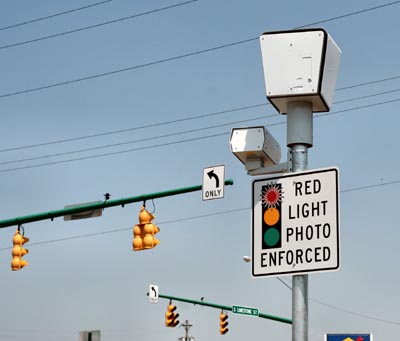 The Charlotte City Council has sent a proposal to jumpstart a controversial red-light camera program to its public safety committee for more review. The program, which Charlotte operated from 1998 to 2006, places cameras at targeted intersections, snaps photos of cars running red lights, and issues tickets to the owners.
Charlotte abandoned the camera initiative after a N.C. Court of Appeals ruled that 90 percent of any revenue it generated must to go local school systems, and Charlotte was left holding the bag to pay for the program on its own.
Now it’s back on the radar, with a fresh set of legal eyeballs and political brain cells working overtime on a way to circumvent the court ruling and get the red-light camera revenue flowing again.
Council committees are typically where politicos park an issue until they can a) gin up more public support for it, or b) get their political ducks in a row before proceeding. Queen City councils have a rich tradition of ignoring public sentiment and proceeding at their own whims and desires, so it’s more likely that councilmembers who support the initiative need additional time to get Superintendent Peter Gorman’s head out of the clouds and agree that the red-light camera program would be a revenue-generating cash cow for Charlotte-Mecklenburg Schools.
Which is odd. Councilmembers who had previously supported the red-light cameras consistently swore up one side and down the other that it was never about the money. It was about public safety.
When red-light cameras were up and snapping in Charlotte, the city paid about 70 percent of the revenue they generated – $35 from every $50 ticket – to Peek Traffic Corp., a private, Florida-based company that operated the program. It cost the city about $1.2 million a year to operate 20 cameras. After the appeals court ruling that 90 percent of the money from camera programs must go to school systems, the city agreed to pay nearly $5 million to CMS for three years of backlogged ticket revenue.
When politicians tell you it’s not about the money, it is. In fact, a good working rule of thumb is that whenever you hear the words “it’s not about the money,” grab your wallet and run. As in most things politic, in the case of red-light cameras it turns out it isn’t about the money, until it suddenly is. A growing number of municipalities, in fact, are increasingly turning to revenue from so-called enforcement taxes, as they struggle with gaping budget deficits.
1 2
 We need your help! If you like PunditHouse, please consider donating to us. Even $5 a month can make a difference!
Short URL: https://pundithouse.com/?p=1588
