

Queen City Rolls Out Controversy
 Charlotte’s Solid Waste Services Division enters a brave, new world this week, with the advent of its vaunted Recycle It! program that features a veritable army of very large and very green 96-gallon rollout recycling bins, part and parcel of a new single-stream collection system that proponents claim will make recycling easier and more efficient for residents and less expensive for the city.
The new initiative, however, has already managed to pile up a load of controversy, due in large part to very tiny chips embedded in the 310,000 green bins that have been distributed across the city.
Each rollout bin contains a radio frequency identification (RFID) chip that is specifically coded to serial numbers on the containers and the addresses where they have been delivered and, presumably, are being used. Or, as the case might be, not used. City officials contend the RFID chips will allow them to track the rates at which neighborhoods around town are recycling, and launch so-called recycling education initiatives in areas where going-green efforts lag.
City officials insist the RFID chips will only be used to track the location and general use of the new bins and stress that the technology can’t determine what’s inside any specific container, how much it weighs, or a particular user’s identification. Data collected on bin locations and use, officials say, will be stored with the city for three years and never made public.
The city, officials note, already uses similar tracking for existing rollout garbage and recycling bins, with serial numbers painted on each container and assigned to an address when they are delivered, but the data is manually recorded and stored. The new RFID chips will do the same, but electronically.
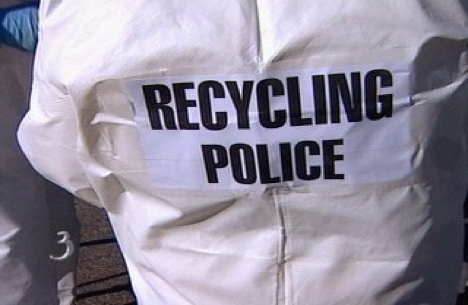
Assurances aside, the new chips have already prompted privacy concerns to bubble to the surface and created a backlash of controversy from critics who argue the technology smacks of Big Brother keeping tabs on residents and worry where the practice could lead.
The concerns might be justified. In municipalities across the country, what started as seemingly innocuous initiatives to streamline recycling have expanded to include much more. In some cases, the programs can procure perks for potential recyclers, provided they’re willing to give up a portion of their private data in exchange. New recycling programs abound that provide residents with rewards, in most cases gift certificates and coupons, based on recycling habits documented and tracked using RFID chips.
In other cases, municipalities are using the stick instead of the carrot, using the RFID technology to line city coffers. In Laurel, Md., for example, recycling was recently mandated for all residents living in single-family homes and townhomes and RFID chips are being used to track recycling habits. Noncompliance with the mandate fetches fines of $25 to $100. In Oshkosh, Wis., officials are tweaking an ordinance that will require homeowners to store collection bins out of site from the street, or face a fine.
1 2
 We need your help! If you like PunditHouse, please consider donating to us. Even $5 a month can make a difference!
Short URL: https://pundithouse.com/?p=2552
